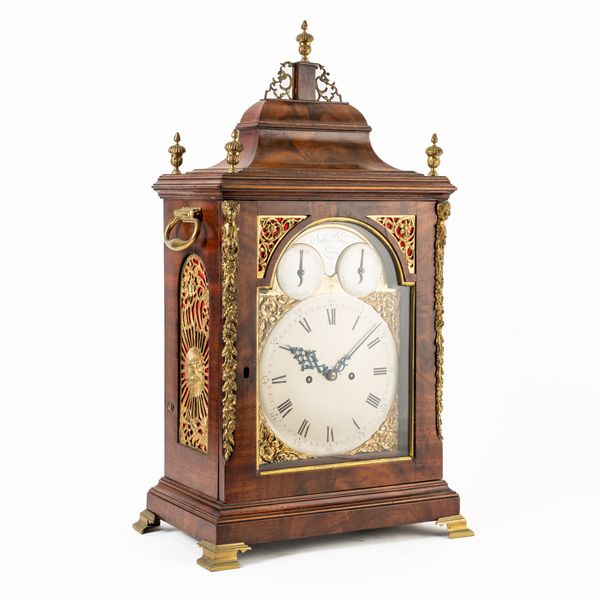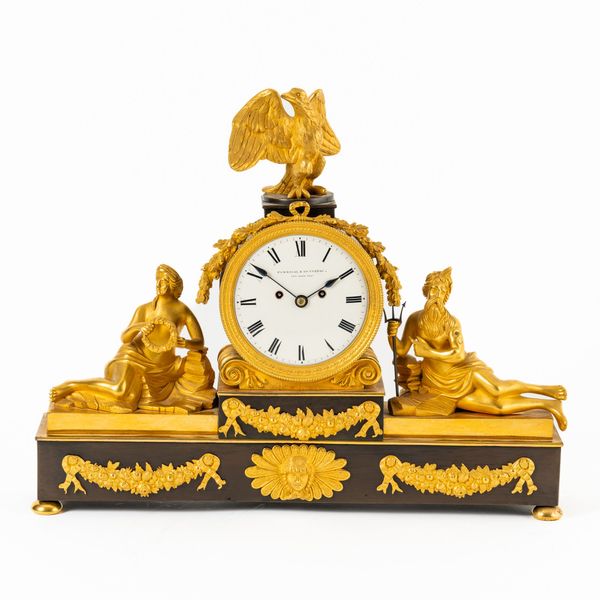
A LATE GEORGE IV ORMOLU AND BRONZE QUARTER STRIKING MANTEL CLOCK WITH PLATFORM ESCAPEMENT
| Starting bid | £1,800 |
| Estimate | £2,000 - £3,000 |
| Absentee deadline | Dec 3, 2025, 12:00:00 PM |
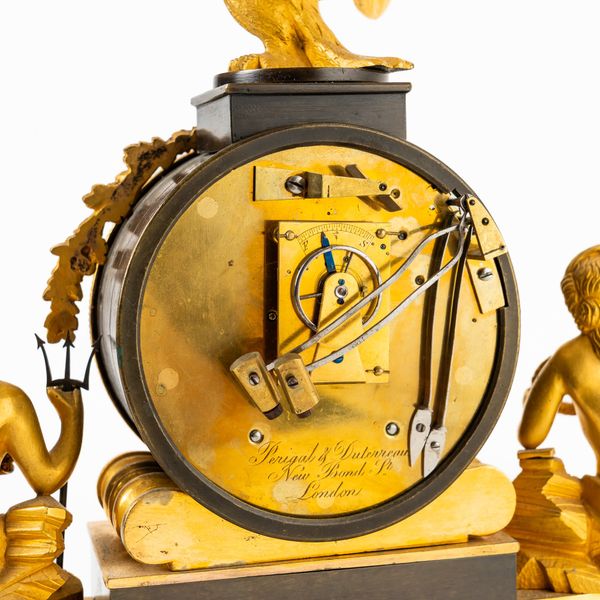
By Perrigal & Duterrau, New Bond Street, London, circa 1835
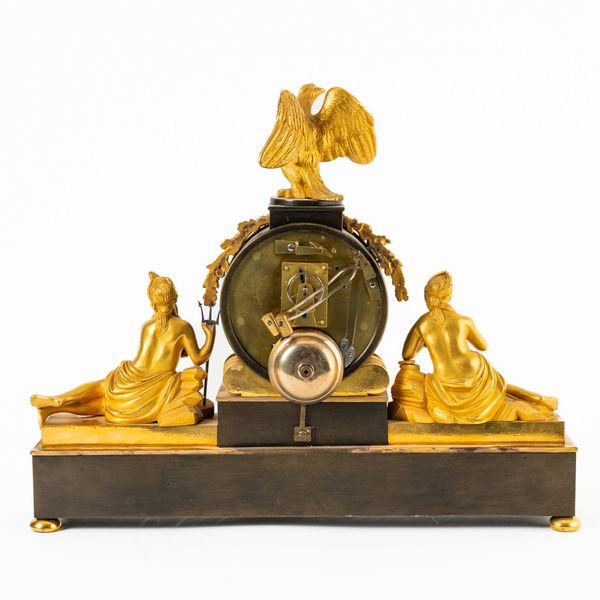
The case surmounted by an eagle and flanked to each side by a figure of Neptune and Minerva, between a beaded bezel and signed 3 1/2in white enamel dial with blued steel hands, on a rectangular base with ribbon-tied festoon, on bun feet, the signed twin train wire gut fusée movement with platform lever escapement, circular plates and striking the quarters on two bells and with hour strike on a single bell
36cm wide; 30cm high; 7cm deep
The Perigal family, originally Huguenot refugees, established themselves in London as skilled goldsmiths and clockmakers in the 18th century. Francis Perigal I (1701–1767) apprenticed as a goldsmith in 1715 and became a freeman in 1741, later producing high-quality longcase clocks and fine watches. The business was continued by his descendants, Francis II and Francis III.
John Duterrau (1755–1814), of Swiss origin, became a partner with the Perigal firm in the late 18th century, forming the partnership Perigal & Duterrau.
They are recorded at New Bond Street and Poland Street, and continued into the early 19th century.
PROVENANCE:
Bonhams, London, 19 March 2008, Lot 114 (£5,400).
CONDITION REPORT
With brass key. In working order currently ticking and striking.