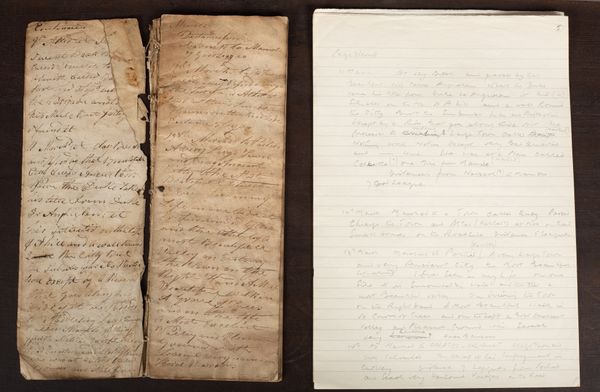
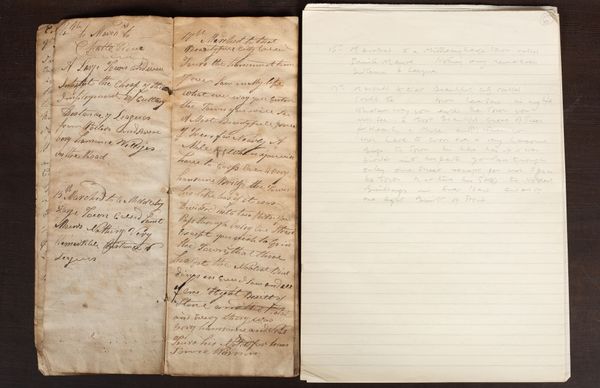
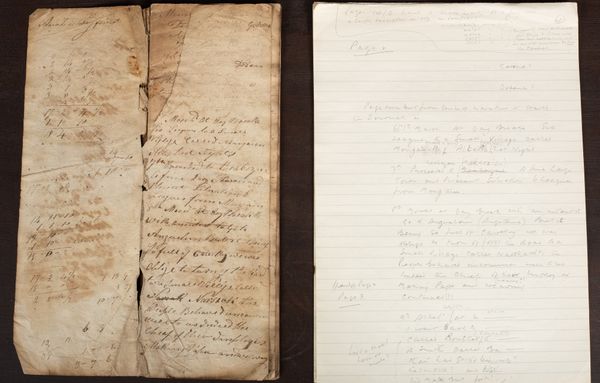
Shaw (Frederick) Manuscript journal kept by a British soldier in the Napoleonic Wars
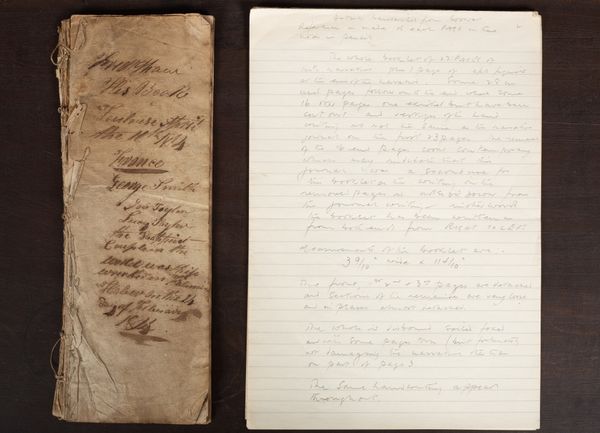
Shaw (Frederick) Manuscript journal kept by a British soldier in the Napoleonic Wars [circa 1814-5], Narrow stitch bound folio (290 x 105 x 5 mm) approximately 20 pages of text on 26 leaves
Footnote:
This manuscript journal, kept by a British soldier named Frederick Shaw, serving in the allied columns marching on Paris in June and July of 1814. The opening word of the journal is missing but is likely “6th”, as the text begins “March’d at day Break six Leagues to a small Village called Mongaion Alted that Night”, continues “7th Proceeded to Beabezue a fine Large Town and pleasant situated 6 Leagues from Mongain”, on the “13th Marched to Poitier” and so on as they traverse France by foot.
Shaw describes the towns and villages through which they pass and their reception by the locals.
He records a minor altercation in Tours, when “me and two more of my friends went into one of their cook shops to get something to eat they brought us a plate of giblets worth about one shilling to the best of my opinion.” Hunger prompts them to call for more, “which they brought we eat that and bread too and drank four bottles of beer and then called for the reckoning”, only to be brought a bill for “not less than nine shillings the beer at six pence per bottle. I told the woman I would take her to the Marie”. Eventually, however, “the Lady Reduced it to Six Shillings”. The confusion of armies on the march supplies some vignettes: near Montreuil, he sets off in the wake of the Sargeant Major to collect “billets” but goes many miles out of his way and is sent back by Lt. Col. Jenkinson, “Commandant of the Artillery of that collum”; the plan to halt at Abbeville is superseded by “ a fresh order for the whole of the German to proceed to Brussels on their way to Germany as we was informed that the Emperor of Austria would not suffer the allies to pass the Rhine”; and Shaw’s detachment, “being the only troops with the third collum was ordered to march the next morning to join the second collum which has been one days march in front all the way from Bourdeaux”.
The final words of the manuscript are “that Night 6th Marched to Boulougne”, which, save for a torn page of accounts, are followed by blank pages.
Condition Report:
heavily worn, remnants of the original limp vellum binding, text damp stained and some tears with loss, some leaves have been excised at the end with only stubs remaining.